
Acad. Prof. Rajaâ Cherkaoui El Moursli

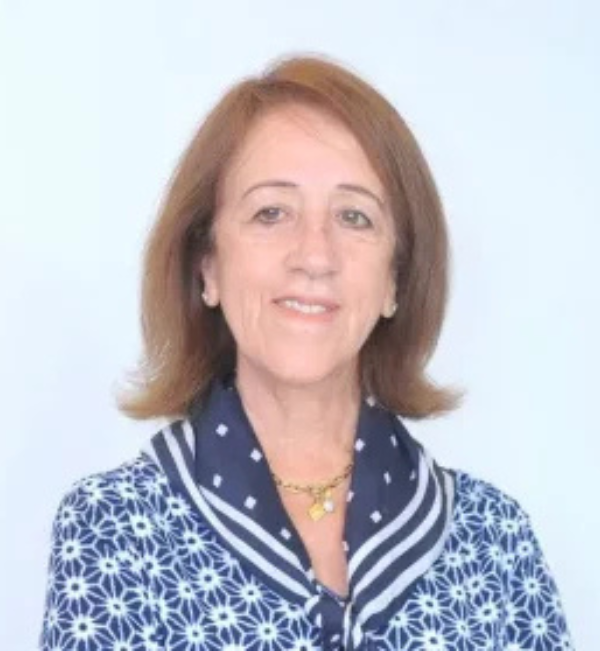
Acad. Prof. Rajaâ Cherkaoui El Moursli
Acad. Prof. Rajaâ Cherkaoui El Moursli is a world-renowned Moroccan nuclear physicist, Emeritus Professor at Mohammed V University in Rabat, and one of Africa’s most prominent scientific figures. She is internationally recognized for her contribution to nuclear physics, particle physics, scientific diplomacy and the participation of Morocco in major global research infrastructures.
A pioneering figure in Morocco’s involvement in the ATLAS Experiment at CERN, she contributed to the scientific work associated with the discovery of the Higgs boson, one of the most significant achievements in modern physics. Her career reflects the capacity of African science to contribute directly to the highest levels of global knowledge production.
Key Highlights
Birth: 1954, Salé, Morocco
Academic Background: Ph.D. in Nuclear Physics, Joseph Fourier University, Grenoble
Major Recognition: L’Oréal-UNESCO For Women in Science Laureate, 2015
Continental Leadership: Vice-President for Northern Africa, African Academy of Sciences
Global Scientific Contribution: Member of the ATLAS Collaboration at CERN
International Recognition: Forbes “50 Over 50 MENA” honoree, 2024
Scientific Legacy: Contributor to Morocco’s participation in CERN’s ATLAS Experiment and to the scientific work related to the discovery of the Higgs boson
Biography
Acad. Prof. Rajaâ Cherkaoui El Moursli is a distinguished Moroccan nuclear physicist, Professor of Nuclear Physics at the Faculty of Sciences of Mohammed V University in Rabat, and one of Africa’s most prominent scientific leaders. She is internationally recognized for her contributions to nuclear physics, particle physics, medical physics, radiation protection, and for her pioneering role in connecting Morocco and Africa to major global scientific infrastructures. She is a Resident Member of the Hassan II Academy of Sciences and Technology, a Fellow of the African Academy of Sciences, a Fellow of The World Academy of Sciences (TWAS), and currently serves as Vice-President for the Northern Africa Region of the African Academy of Sciences (AAS). The AAS official Governing Council page lists her as “Vice President, Northern Africa region,” and the Academy describes the Governing Council as its Board of Directors, responsible for oversight, policy, strategic thinking, and the election of new Fellows.
Born in Salé, Morocco, Acad. Prof. Cherkaoui El Moursli pursued her higher education in France at Université Joseph Fourier in Grenoble, where she obtained advanced degrees in physics, including a PhD in Nuclear Physics. She later completed a Doctorat d’État in Nuclear Physics at Mohammed V University in Rabat, in collaboration with Université Joseph Fourier. In 1982, she joined the Faculty of Sciences at Mohammed V University, where she built a long academic career, becoming Professor of Nuclear Physics and later Head of the Nuclear Physics Laboratory. From 2013 to 2017, she served as Vice-President for Research, Innovation, Cooperation and Partnership at Mohammed V University, and in 2014 she was appointed Acting Dean of the Faculty of Arts and Humanities.
A major milestone in her scientific career has been her decisive contribution to Morocco’s participation in the ATLAS experiment at CERN, one of the flagship experiments of the Large Hadron Collider. Since 1996, she has been associated with the ATLAS Collaboration and has led the Rabat ATLAS group, contributing to detector construction, simulation, commissioning, data analysis, and detector performance. CERN recognized her as a Moroccan physicist who led a research team in Morocco for the ATLAS Collaboration and contributed to the simulation and construction of the ATLAS electromagnetic calorimeter.
Through ATLAS, Acad. Prof. Cherkaoui El Moursli contributed to one of the greatest scientific achievements of the 21st century: the experimental work associated with the discovery of the Higgs boson. CERN reported that ATLAS congratulated her on the recognition of her role in the Higgs-boson discovery, while TWAS later emphasized that she led a Moroccan team involved in the ATLAS experiment at CERN and that ATLAS experiments enabled the discovery of the Higgs boson, whose theoretical mechanism was recognized by the 2013 Nobel Prize in Physics.
Her research spans nuclear physics, particle physics and physics beyond the Standard Model, medical physics, radiotherapy, nuclear medicine, imaging, environmental physics, radiation protection, Monte Carlo simulation, big data science, and machine learning. In addition to ATLAS, she has been involved in major international collaborations including KM3NeT and ANTARES, as well as European and international cooperation projects such as H2020, Erasmus+, TEMPUS, and bilateral scientific programmes with France, Spain, and Sweden.
Alongside frontier research, Acad. Prof. Cherkaoui El Moursli has made a lasting national impact through capacity building. She played a central role in creating and strengthening Morocco’s first Master’s programme in Medical Physics, launched at Mohammed V University, helping to establish a professional pipeline of medical physicists and radiophysicists for Moroccan hospitals. Her work helped link high-energy physics, radiation sciences, medical imaging, and radiotherapy to concrete health-sector needs in Morocco. Her attached biography notes that more than thirty graduates of this Master’s programme have gone on to work as radiophysicists in Moroccan hospitals.
Her mentorship has also been exceptional. According to her consolidated CV, she has supervised 22 completed PhD theses and 27 Master’s or advanced graduate projects, while contributing to the training of many young researchers in nuclear science, medical physics, radiation protection, and advanced instrumentation. Her scientific output includes more than 500 ATLAS collaboration papers, sustained publications in nuclear applications, medical physics and environmental monitoring, and citation indicators reported in her CV at Scopus h-index 133 and more than 50,000 citations.
Acad. Prof. Cherkaoui El Moursli’s leadership extends well beyond the university. She has held or continues to hold important governance roles in Moroccan and international scientific institutions, including the National Centre for Nuclear Energy, Science and Technology (CNESTEN), the National Centre for Scientific and Technical Research (CNRST), and the Moroccan Agency for Nuclear and Radiological Safety and Security (AMSSNuR). She has also served as an expert evaluator and panel member for organizations and programmes including TWAS, the InterAcademy Partnership, the Academy of Science of South Africa, FCT Portugal, the Schmidt Science Fellows, and other international scientific bodies.
In Africa, she has played a major role in science policy, academy governance, and science diplomacy. She was elected Vice-President for Policy Review and Administration of the Network of African Science Academies (NASAC) for 2019–2025. She was also elected Vice-President of the Northern Africa Region of the African Academy of Sciences for the AAS Governing Council, a role through which she contributes to strengthening scientific excellence, equity, cooperation, and policy impact across the continent. The AAS has publicly described her as a distinguished physicist, AAS Fellow, member of the AAS Governing Council, and Vice-President for Northern Africa.
Her election as Vice-President for Northern Africa of the African Academy of Sciences reflects the continental recognition of a career dedicated not only to scientific excellence, but also to institutional transformation, inclusive leadership, women’s advancement in STEM, and the strengthening of African participation in global science. Through this role, Professor Cherkaoui El Moursli continues to advocate for stronger African scientific institutions, better recognition of African researchers, and a model of science diplomacy that links excellence, capacity building, and sustainable development.
Her international distinctions are numerous. In 2015, she received the L’Oréal–UNESCO For Women in Science International Award, representing Africa and the Arab States, becoming the first Moroccan laureate of this prestigious distinction. UNESCO listed her among the five 2015 laureates honoured for ground-breaking discoveries in the physical sciences, while CERN highlighted that she was recognized among the laureates for her contributions to the physical sciences and to ATLAS.
In 2018, she was elected Fellow of TWAS,The World Academy of Sciences, and in 2022 she received the TWAS Medal for her achievements in nuclear physics. TWAS described her as an accomplished Moroccan physicist whose high-level research and international collaborations helped propel Morocco onto the global scientific stage.
She has also been recognized by many other institutions and platforms. Her distinctions include election as Fellow of the African Academy of Sciences, election as Fellow of the European Academy of Sciences and Arts, the WIN Global Excellence Award in 2023, recognition by BBC 100 Women in 2017, and inclusion in Forbes “50 Over 50: Europe, Middle East and Africa” in 2024. Forbes highlighted her as a Moroccan professor of nuclear physics whose research helped prove the existence of the Higgs boson.
Professor Rajaâ Cherkaoui El Moursli has built a career that bridges fundamental physics, national capacity building, medical impact, science diplomacy, and women’s leadership in science. Her trajectory demonstrates that participation in world-class scientific collaborations can directly strengthen national research systems, train new generations, create strategic expertise, and open opportunities for Africa in global science. Through her scientific achievements, mentorship, institutional leadership, and current role as Vice-President for Northern Africa of the African Academy of Sciences, she stands as a leading voice for African excellence, inclusive scientific leadership, and the transformative power of science for development.